


Key factors:
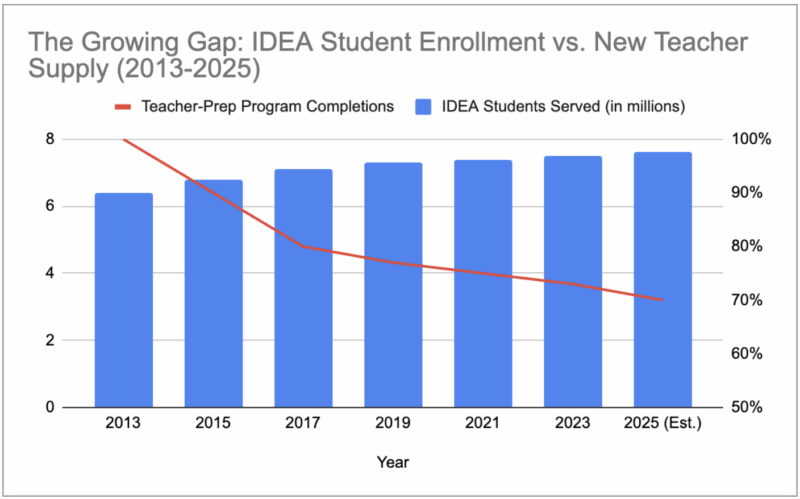
America’s particular training system is going through a slow-motion collapse. Almost 8 million college students now obtain companies below the People with Disabilities Schooling Act (IDEA), however the variety of certified lecturers and associated service suppliers continues to shrink. Districts from California to Maine report the identical story: unfilled positions, overworked employees, and college students lacking the companies they’re legally entitled to obtain.
“The promise of IDEA means little if there’s nobody left to ship it.”
The info inform a transparent story. Since 2013, the variety of youngsters ages 3–21 served below IDEA has grown from 6.4 million to roughly 7.5 million. But the instructor pipeline has moved in the other way. In line with Title II experiences, teacher-preparation enrollments dropped 6 % during the last decade and program completions plunged 27 %. On the similar time, almost half of particular educators depart the sphere inside their first 5 years.
By 2023, 45 % of public faculties had been working with out a full instructing employees. Vacancies had been most acute in particular training. Attrition, burnout, and early retirements outpace new entrants by a large margin.
Why the standard mannequin not works
For many years, faculties and staffing companies have fought over the identical dwindling pool of licensed suppliers. Recruiting cycles stretch for months, whereas college students watch for evaluations, therapies, or IEP companies.
Conventional staffing companies deal with long-term contracts lasting six months or extra, which is sensible for stability, however ignores an unlimited, untapped workforce: hundreds of credentialed professionals who may contribute just a few further hours every week if the system made it straightforward.
In the meantime, the method of credentialing, vetting, and matching candidates stays gradual and handbook, reliant on spreadsheets, e-mail, and recruiters juggling dozens of openings. The result’s predictable: delayed assessments, compliance threat, and burned-out employees protecting for unfilled roles.
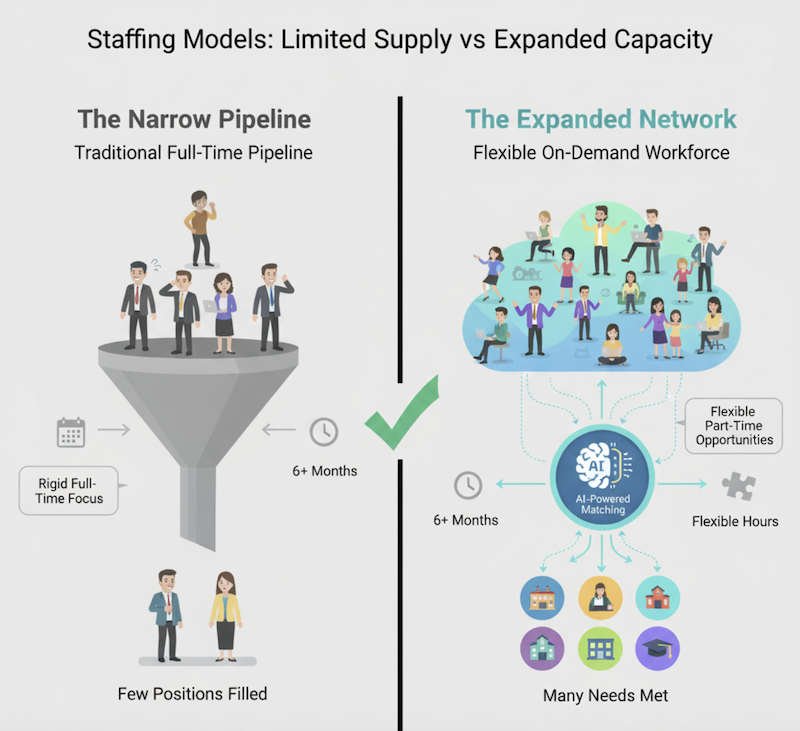
“Districts and recruiters compete for a similar individuals, after they may very well be increasing the pool as a substitute.”
The hidden workforce hiding in plain sight
Throughout the nation, tens of hundreds of licensed professionals–speech-language pathologists, occupational therapists, college psychologists, particular educators–are under-employed. Many have stepped again from full-time work to look after households or pursue personal follow. Others left the classroom however nonetheless need to contribute.
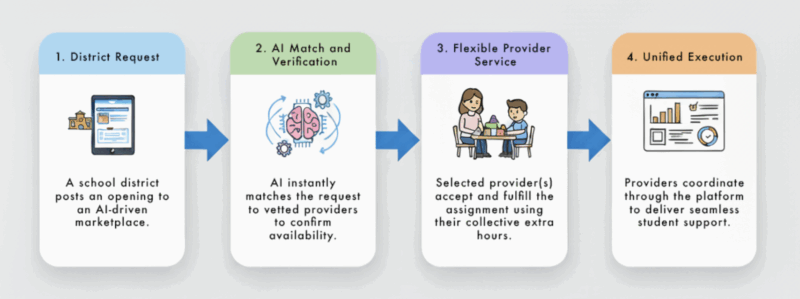
Think about if districts may faucet these “further hours” via a vetted, AI-powered market. A system that matched real-time college requests with certified suppliers of their state. A mannequin like this wouldn’t exchange full-time roles; it could broaden capability, scale back burnout, and convey expertise again into the system.
This isn’t theoretical. The identical “on-demand” idea has already modernized industries from drugs to media. Schooling is lengthy overdue for a similar reinvention.
What modernization seems like
- AI-driven matching: Districts put up particular service wants (evaluations, IEP conferences, remedy hours). Licensed suppliers select alternatives that match their schedule.
- Verified credentials and supplier profiles: Platforms combine state licensure databases and background checks to make sure compliance and supply profiles with all candidate data together with on-demand, video interviews so faculties could make knowledgeable hiring choices instantly.
- Good staffing metrics: Faculties monitor fill-rates, supplier utilization, and repair delays in actual time.
- Built-in workflows: The system plugs into current particular training administration instruments. No new studying curve for directors.
A second of urgency
The scarcity isn’t simply inconvenient; it’s systemic. Every unfilled place represents college students who lose remedy hours, districts risking due-process complaints, and educators pushed nearer to burnout.
With IDEA college students now representing almost 15 % of all public college enrollment, the nation can’t afford to let a twentieth-century staffing mannequin dictate twenty-first-century outcomes.
We’ve the know-how. We’ve the workforce. What we want is the need to attach them.
“Modernizing particular training staffing isn’t innovation for innovation’s sake, it’s survival.”

